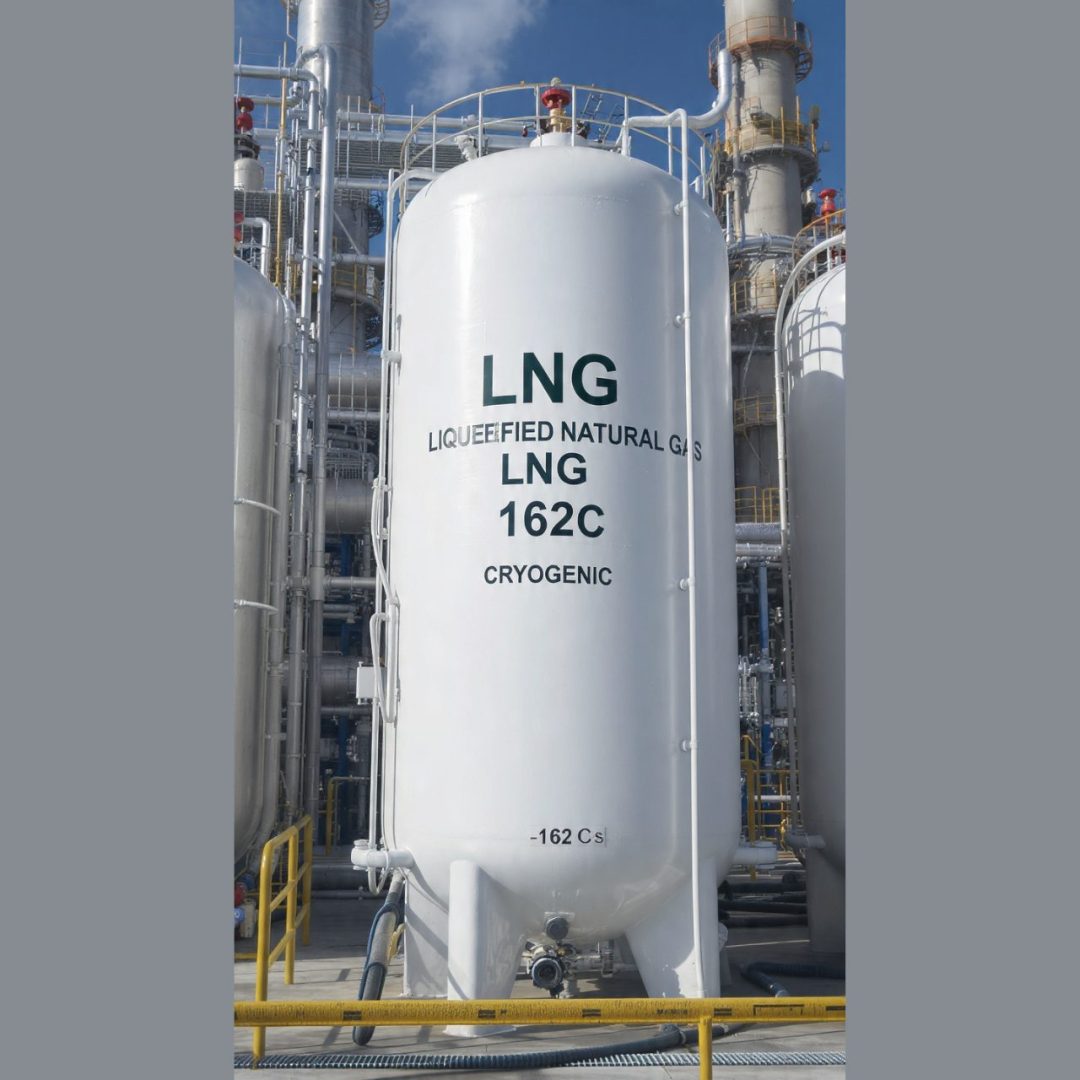
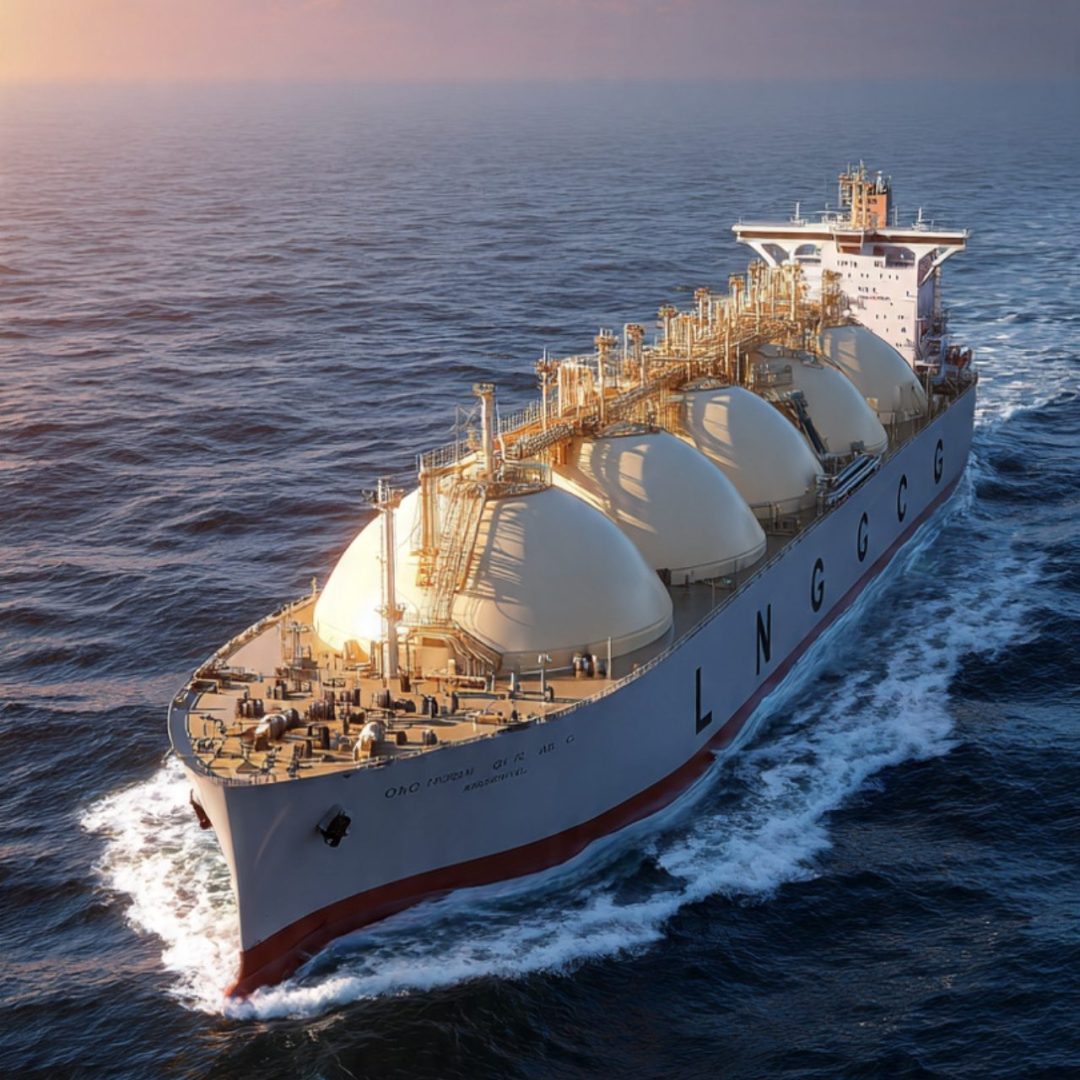
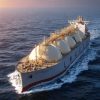
It is natural gas (mainly methane) that has been cooled to about −162°C (-260°F), turning it into a liquid. This reduces its volume by approximately 600 times, making it much easier and more economical to transport by ship over long distances.
HOW LNG IS PRODUCED
• Natural gas is extracted from gas fields.
• Impurities such as water, carbon dioxide, and sulfur are removed.
• The gas is cooled or freezed to −162°C.
• It becomes a clear, odorless liquid called LNG.
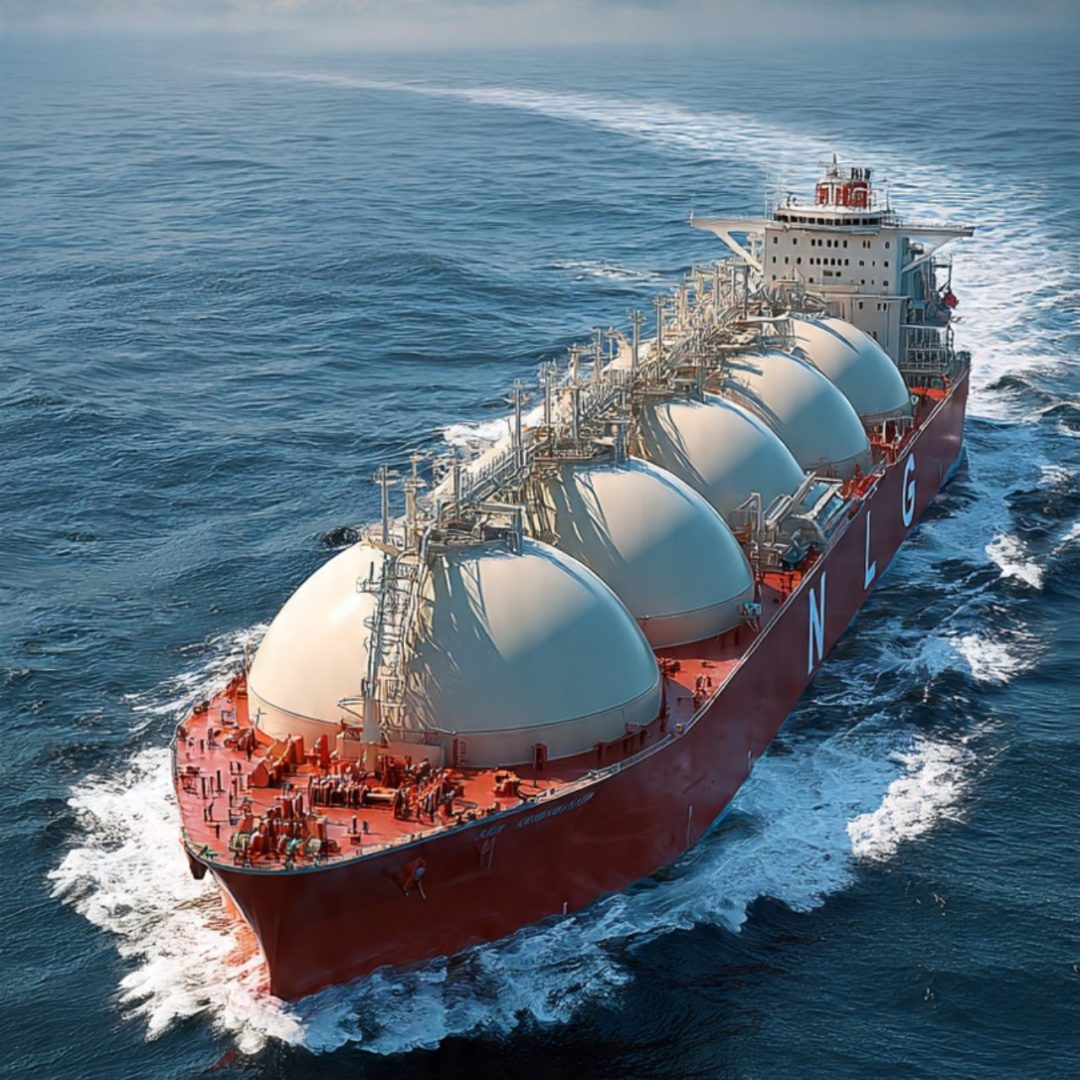
• It is pumped into huge white cryogenic spheres on the LNG ship.
PROPERTY DETAILS
• Natural gas: 90-95% methane CH4, cooled to liquid
• Temp: -162°C** at 1 atm pressure. That’s colder than Antarctica
• Volume: Gas → liquid shrinks 600x. 600m³ gas becomes 1m³ liquid
• Look Clear, colorless liquid. Like water but super cold.
• Smell: Odorless. They add smell like rotten eggs before it reaches homes.
• Use: Power plants, factories, cooking gas after regasification.
COMMON USES OF LNG
• Power generation
• Industrial fuel
• Residential heating and cooking
• Marine fuel for ships
• Feedstock for petrochemical industries
KEY DIFFERENCES
• LNG is primarily composed of methane, while LPG consists mainly of propane and butane.
• LNG is stored at an extremely low temperature of −162°C, whereas LPG is stored at normal temperatures under pressure.
• LNG is produced from natural gas fields, while LPG is produced during crude oil refining and natural gas processing.
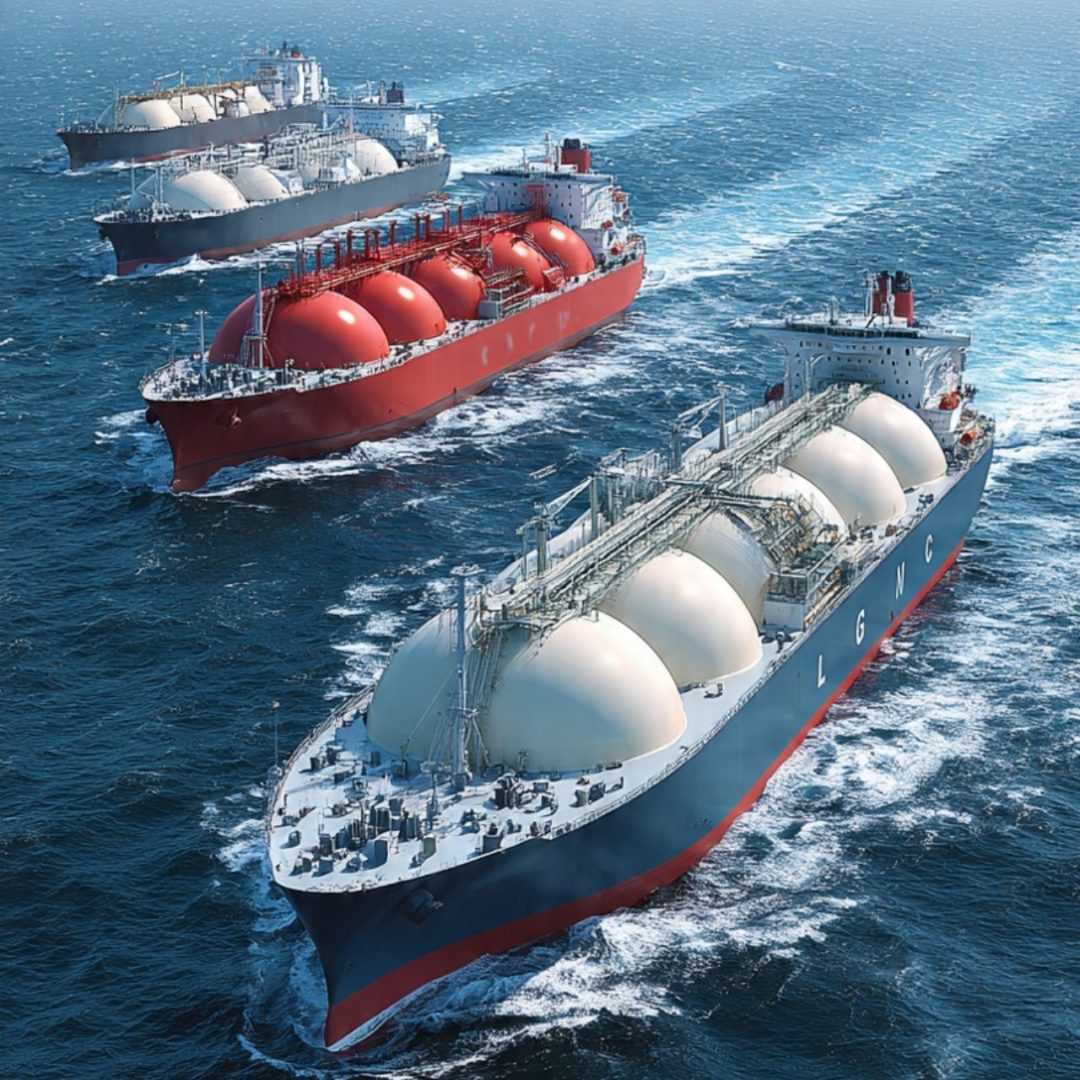
• LNG requires cryogenic storage tanks and specialized LNG carriers for transportation, while LPG is transported using pressurized cylinders, tankers, and LPG carriers.
• LNG is widely used for power plants, industrial operations, marine fuel, and international energy trade, whereas LPG is commonly used for household cooking, heating, industrial fuel, and automotive fuel (autogas).
• LNG is generally preferred for large-scale energy supply and export, while LPG is more suitable for domestic, commercial, and portable fuel applications.
LNG IN INTERNATIONAL TRADE
Major LNG exporters include countries such as Qatar, United States, and Australia. LNG is transported globally by specialized LNG carriers to importing countries in Europe, Asia, and Africa.
For oil and gas trading, LNG is a major commodity traded under long-term contracts as well as spot cargo agreements, similar to crude oil and LPG.
Advantages
- Provides a clean-burning, low-emission energy source with high thermal efficiency, making it an environmentally responsible alternative to coal and conventional liquid fuels.
- Its volume is reduced by approximately 600 times during liquefaction, allowing economical storage, efficient transportation, and lower logistics costs for international supply.
- Each LNG cargo undergoes comprehensive laboratory testing, quality assurance, and third-party inspection to ensure compliance with international LNG specifications before shipment.
- Available under FOB, CIF, spot cargo, and long-term supply contracts with customized shipment volumes, flexible delivery schedules, and destination-specific logistics support.
Reviews
There are no reviews yet.