
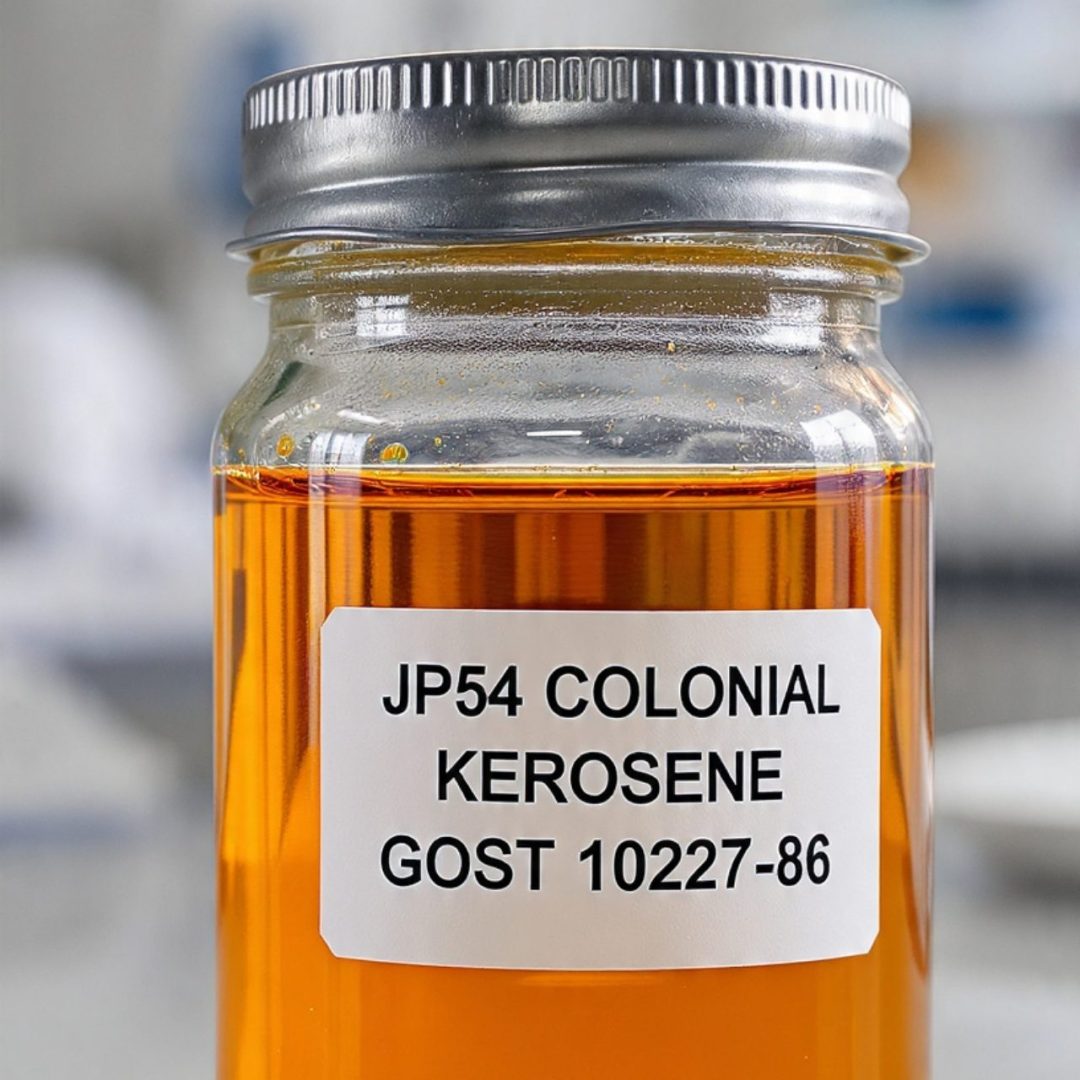
JP54 is a military-grade aviation turbine fuel derived from kerosene. It originated as a specification used by the military and is closely related to jet fuels used in aircraft turbine engines. JP54 is aviation Kerosene Colonial Grade 54” to GOST 10227-86. It’s a jet fuel grade, but NOT an official international spec like Jet A-1.
WHAT DOES JP54 MEAN?
• JP stands for Jet Propellant.
• JP-4 and JP-5 were historical military jet fuels.
• The term “JP54” is widely used in commodity trading circles, but in practice most commercial aviation fuel traded internationally today is Jet A-1.
KEY CHARACTERISTICS
• Fuel Type: Aviation Turbine Fuel
• Base Product: Kerosene
• Main Use: Jet aircraft and turbine engines
• Appearance: Clear to straw-colored liquid
• Energy Content: High energy density
PROPERTY SPEC VS JET A-1
• Type: Kerosene-type aviation turbine fuel Same family as Jet A-1
• Color: Orange to straw-colored liquid, Jet A-1 = clear/straw
• Density: @15°C** 776 – 840 kg/m³, Jet A-1: 775-840 kg/m³
• Flash Point: 38°C min, 42°C max, Jet A-1: 38°C min
• Freeze Point: -40°C max Jet A-1: -47°C max – this is the big diff
• Sulfur, Total: 0.30% wt max Same as Jet A-1
• Aromatics: 22% vol max, Jet A-1: 25% max
• Smoke Point: 19mm min, Jet A-1: 25mm min
• Net Heat/Energy: 18.4 MJ/kg min, Jet A-1: 42.8 MJ/kg min
• Additives: Antioxidant 17-24 mg/L, Static dissipater ASA-3/Stadis 450 Similar to Jet A-1.
JP54 Vs JET A-1
Many trading documents use “JP54” and “Jet A-1” interchangeably, but technically they are not identical specifications.
• Origin: JP54 is based on a military-related fuel specification, whereas Jet A-1 is the internationally recognized commercial aviation fuel standard.
• Usage Today: JP54 is primarily used as a trading term in commodity markets, while Jet A-1 is the standard fuel used by commercial airlines worldwide.
• Market Acceptance: JP54 appears in some commodity trading offers, whereas Jet A-1 is universally accepted by airlines, airports, and aviation authorities across the globe.
• International Standards: JP54 is generally associated with specifications such as GOST 10227-86, while Jet A-1 complies with internationally recognized standards including ASTM D1655 and DEF STAN 91-091.
• Commercial Availability: JP54 is mainly encountered in oil trading circles, while Jet A-1 is the most widely produced, traded, and supplied aviation fuel globally.
• Application: JP54 may be supplied for specific trading or regional applications, whereas Jet A-1 is the preferred fuel for commercial jet aircraft and turboprop operations worldwide.
IMPORTANT NOTE FOR OIL TRADING
A large number of online “JP54” offers are not associated with actual aviation fuel transactions. In legitimate international aviation fuel markets, buyers typically contract for Jet A-1 that meets recognized standards such as ASTM D1655 and DEF STAN 91-91.
Colonial JP54 is what brokers call Russian TS-1/RT grade kerosene when marketing it as “jet fuel”. It’s technically a kerosene that can power turbine engines, but most airlines outside Russia/CIS won’t take it because it fails Jet A-1 freeze point + smoke point.
In trading circles you’ll see it offered as “JP54, Jet A1 & D2” packages. But JP54 is NOT Jet A-1.
Advantages
- Provides high energy density and efficient combustion, making it suitable for approved turbine-powered aircraft and industrial turbine applications.
- Refined from premium kerosene fractions to deliver consistent fuel quality, dependable performance, and stable combustion characteristics.
- Every shipment undergoes comprehensive refinery quality testing and independent inspection by internationally recognized agencies such as SGS or Bureau Veritas, ensuring compliance with agreed contractual specifications.
- Available under FOB, CIF, spot cargo, and long-term supply contracts with customized shipment quantities and flexible international logistics solutions based on buyer requirements.
Reviews
There are no reviews yet.